The Ninja Crispi 4-in-1 Glass Air Fryer aims to reinvent the countertop appliance with a modular system built for small kitchens. It replaces a single bulky basket with a compact central PowerPod that clicks onto different glass containers. Our findings reveal whether this design truly delivers on its promises of easy cleaning, cooking visibility, and space savings, or if its novel approach introduces new hassles.
Quick Verdict: The Ninja Crispi is a clever, space-saving air fryer best suited for singles, couples, or anyone with limited counter space who prioritizes easy cleaning and portion control over cooking large family-sized batches in one go.
Pros and Cons
Pros
- The modular glass containers are completely dishwasher safe, eliminating the chore of scrubbing a greasy, non-stick basket.
- Seeing your food cook through the glass walls provides unmatched visibility, allowing you to monitor browning without interrupting the cycle.
- The compact PowerPod and containers take up minimal counter space and can be easily stored separately.
- With 1500 watts and a 450°F max temperature, it delivers heat output comparable to many full-sized basket models for quick, crispy results.
Cons
- The adapter system for larger containers adds a mandatory, fiddly step that some owners find annoying for everyday use.
- Lightweight foods like leafy greens or thin fries can get blown around by the powerful fan, leading to uneven cooking.
- There is no preheat indicator or beep, requiring you to watch the display or guess when it’s reached temperature.
- The 4-quart maximum capacity is smaller than a standard 5-6 quart air fryer basket, limiting batch sizes for families.
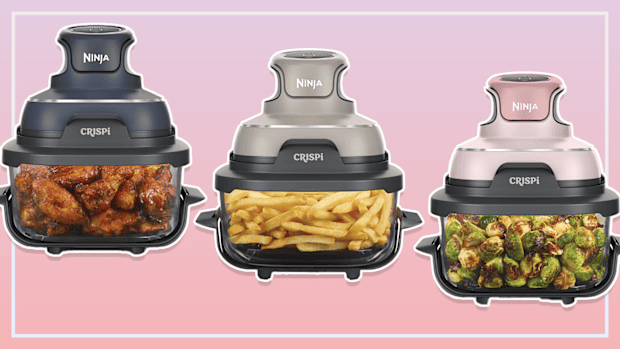
First Impressions & Key Specs
Right out of the box, the Ninja Crispi’s mission is clear: shrink the footprint and simplify cleanup. The 1500-watt PowerPod is surprisingly small, yet it generates enough concentrated heat to reach 450°F, which is essential for getting food truly crispy. You get two core glass containers: a 6-cup (about 1.5-quart) small one and a 4-quart large one, each with a lid and a perforated crisper plate. A separate 2.5-quart container is available for purchase.
This setup is a practical match for small households. The small container perfectly fits a single serving of fries or a couple of chicken breasts, while the large one can handle a pound of wings—enough for two people. Because you choose the container size, you avoid wasting energy heating a large, mostly empty basket. Everything except the PowerPod is dishwasher safe, a major shift from the hand-wash-only baskets of traditional models that trap grease. The whole system is also lightweight, making it easy to move or tuck away in a cabinet.
What It Does Well (The Good)
The Ninja Crispi’s strengths flow directly from its glass-container design. Cleanup is its killer feature. After cooking, you just lift off the PowerPod and place the entire glass container, crisper plate and all, into the dishwasher. No more wrestling with a fixed basket or scrubbing baked-on grease from tiny crevices. This turns air frying from a cooking method with a tedious cleanup phase into a genuinely low-effort routine.
The clear glass walls offer a level of cooking visibility that a metal basket simply can’t. You can watch fries brown or salmon fillets cook through without pulling the basket out to check, reducing the guesswork and frequent shaking some recipes require. Its four cooking functions cover most needs. Max Crisp uses high, focused heat for frozen foods like fries and nuggets, while ReCrisp gently revives leftovers like pizza without burning them.
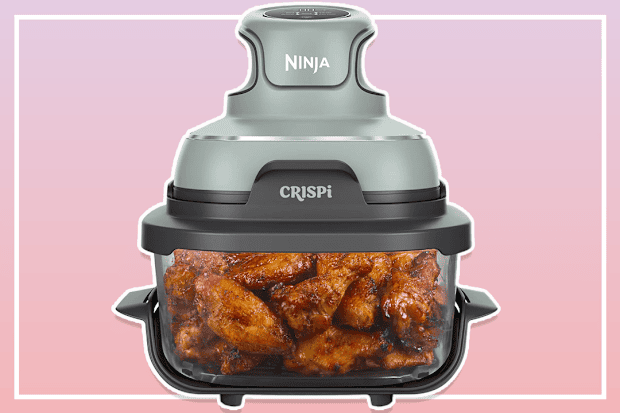
What’s Annoying (The Not-So-Good)
The Ninja Crispi’s innovative design comes with inherent trade-offs. Using the 4-quart or optional 2.5-quart container requires a plastic adapter. You must click the PowerPod into this adapter first, then place the assembly onto the container. It’s an extra part to handle, store, and clean. More critically, it creates a wider gap between the heating element and the food, which can subtly alter cooking dynamics compared to the small container where the PowerPod sits directly on the rim.
The powerful fan needed for air circulation can be too effective for very light foods. Ingredients like herbs, leafy greens, or thin-cut fries can blow around inside the container, leading to uneven cooking. The solution is to use the crisper plate to weigh them down or cook smaller batches, but it’s a physical limitation of the open-container design. Finally, the unit lacks a preheat signal. You set the time and temperature, press start, and must estimate when the chamber is hot enough to add food—a minor but frequent frustration for those who like precision.
Setup & Daily Use Experience
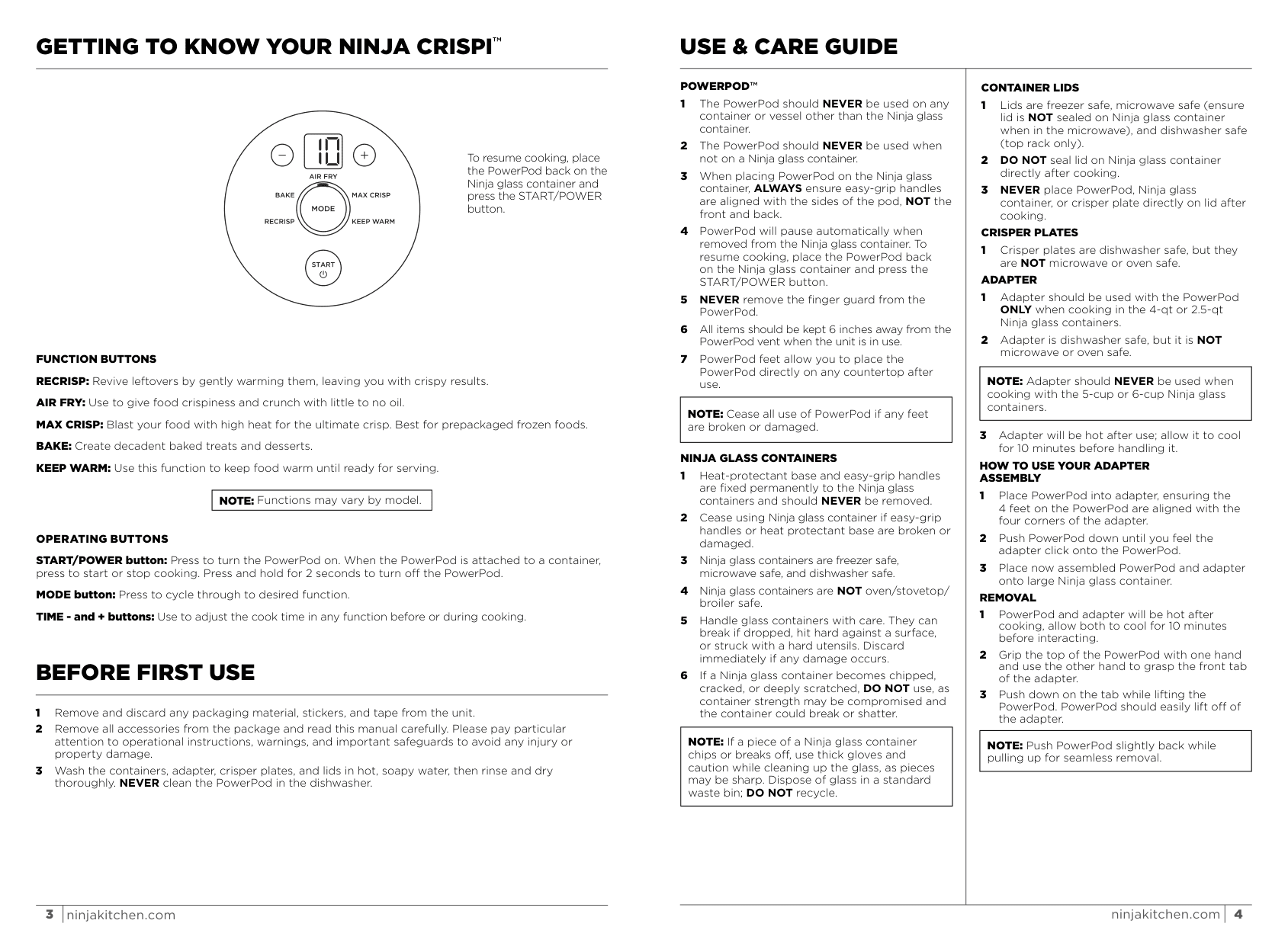
Setup is straightforward, with one non-negotiable first step: washing all glass containers, lids, crisper plates, and the adapter in hot, soapy water to remove manufacturing residues. Remember, the PowerPod itself should only be wiped with a damp cloth; never submerge it.
Daily operation is simple. Plug in the PowerPod, press the Start button, and cycle through the four functions with the Mode button. The most critical step for success is ensuring the PowerPod is properly seated. The handles on the glass container must align with the sides of the PowerPod. If misaligned, the display will show “LID” and cooking won’t start—a common user error covered in our LID error troubleshooting guide. To shake food mid-cycle, just lift the PowerPod off; the unit pauses automatically. After cooking, the PowerPod’s heat-resistant feet let you place it directly on the counter, and the glass container’s integrated handles make for safe transport.
Common Issues You Might Hit
Most problems stem from the unique assembly or the powerful airflow. The “LID” display is the most frequent hiccup, appearing when the PowerPod isn’t fully or correctly seated. The fix is to realign the handles and press down firmly. If food cooks unevenly—raw in some spots, burnt in others—it’s often due to overcrowding or lightweight foods being blown around. For persistent issues, our guide on food not cooking right dives deeper.
The unit beeps at the start and end of a cycle and if the PowerPod is removed mid-cycle. An unresponsive control panel or an “E” error code typically indicates a sensor or electrical fault. A simple power cycle (unplugging for a minute) often resolves this, but persistent problems require contacting customer service, as detailed in our article on beeping and error codes. While the glass is durable, it requires careful handling to avoid thermal shock. Our glass container safety guide covers best practices for cooling, cleaning, and inspection.
Final Verdict: Who Should Buy This?
The Ninja Crispi 4-in-1 Glass Air Fryer excels for the right user but asks for compromises. It’s ideal for small households, singles, couples, or apartment dwellers with limited kitchen space. If you primarily cook for one or two, value seeing your food as it cooks, and hate cleaning greasy air fryer baskets, this design is a genuine advantage. Its portability also makes it strong for renters or as a secondary appliance.
Think twice if you regularly cook large batches for a family. The 4-quart maximum capacity is smaller than a standard basket. If your primary goal is the highest capacity with the least fuss, a traditional basket-style air fryer will be more efficient. Similarly, if you prefer a “set it and forget it” appliance without any assembly, the mandatory adapter for larger batches might feel like an unnecessary complication.
Frequently Asked Questions
Does the Ninja Crispi need to preheat?
The Ninja Crispi does not have a dedicated preheat cycle or indicator. You select your function, time, and temperature, then press start. The unit begins heating immediately. For best results, many owners allow it to run for 2-3 minutes before adding food, but you must watch the clock as it won’t beep to tell you when it’s ready.
When should I use the Max Crisp function on my Ninja Crispi?
Use the Ninja Crispi’s Max Crisp function primarily for frozen, pre-breaded foods like fries, nuggets, or appetizers. This function uses the highest possible heat (up to 450°F) in a concentrated way to achieve a fast, deep-fry-like crisp on foods that already have a coating. It is not recommended for fresh vegetables or delicate proteins, which could burn on the outside before cooking through.
Is the Ninja Crispi PowerPod safe on my countertop?
Yes, the Ninja Crispi PowerPod has integrated heat-resistant feet designed to be placed directly on countertops after use. You should still ensure the surface is level, clean, and dry, and keep the vent area clear. The glass containers also have a fixed heat-protectant base, allowing you to cook on any countertop without a trivet.
How do I know when to use the crisper plate in the Ninja Crispi?
The crisper plate should be used for almost all Air Fry, Max Crisp, and Bake functions in the Ninja Crispi. It elevates the food, allowing hot air to circulate underneath for even cooking and crisping. The main exception is when using the ReCrisp function for certain leftovers, where you might layer food directly in the container. For lightweight foods that may blow around, the crisper plate also acts as a necessary weight to keep them in place.
